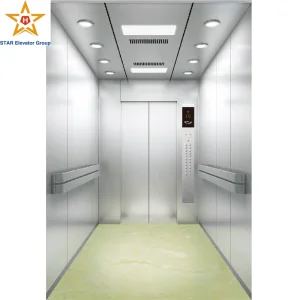
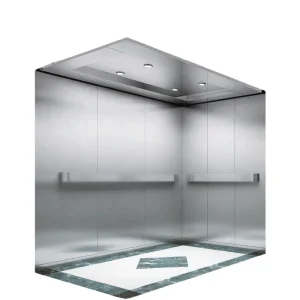
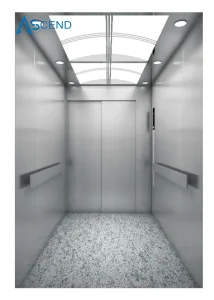
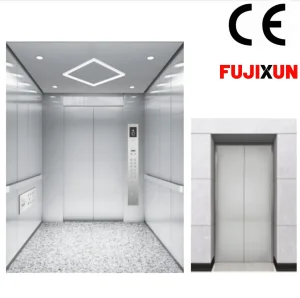
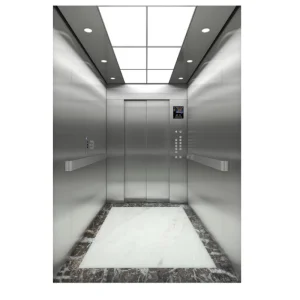
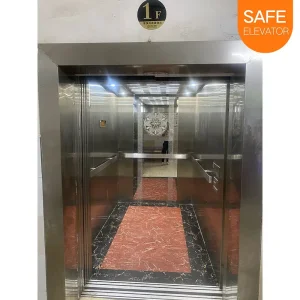
Engineered to meet South Korea's demanding healthcare mobility and emergency medical standards.
As South Korea's second-largest metropolitan area, Busan has evolved into a global hub for medical tourism and advanced clinical services. Driven by high-density urban development, Busan’s prominent hospitals—such as Pusan National University Hospital (PNUH), Dong-A University Hospital, and Inje University Haeundae Paik Hospital—rely heavily on high-rise, multi-wing facilities. Navigating these spaces demands a highly advanced vertical transport network. Hospital elevators must operate flawlessly, maintaining zero downtime while navigating complex traffic layouts.
Additionally, Busan's coastal location presents unique challenges. High salinity and humidity from the East Sea call for high-performance anti-corrosive metals, specifically marine-grade SUS316 stainless steel, and hermetically sealed electrical enclosures. Elevator manufacturers supplying Busan must guarantee robust systems that resist atmospheric corrosion while meeting the strict safety requirements of the Korea Elevator Safety Agency (KoELSA).
Modern hospital elevator design must prioritize infection prevention. Standard stainless steel surfaces can easily harbor pathogens. Our systems integrate advanced safety measures to address this threat:
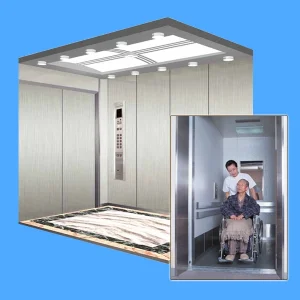
Engineered for major medical centers, trauma departments, and high-occupancy patient transport.
Custom Lifts That Suit Your Need
Ascom Elevator is a professional Elevators Manufacturers and Suppliers in China, Fuji Lifts & Elevators. Our company mainly covers Passenger elevator, Home elevator, Sightseeing elevator, Cargo elevator, Escalator, Shopping cart escalator...
South Korea maintains some of the most rigorous elevator safety and operational standards in the world. Any system installed in Busan must comply fully with the requirements of the Korea Elevator Safety Agency (KoELSA) and conform to KS standards. Our hospital lifts are designed, manufactured, and tested to meet or exceed these requirements, featuring:
International procurement departments demand transparency, precise technical specifications, and reliable logistical processes. For projects in Busan, we provide seamless door-to-door delivery through Busan Port. All documentation is prepared in accordance with South Korean customs regulations, and our engineering team provides complete support from design to installation:
Explore our certified range of hospital elevators, optimized for speed, precision, and patient safety.
The integration of Internet of Things (IoT) technologies is transforming vertical mobility in healthcare settings. Future-ready hospitals in Busan require systems that support predictive maintenance. Using real-time monitoring sensors, our elevators continually track motor temperature, door open/close cycles, and vibration levels. This data is processed through cloud networks to detect mechanical issues before they cause service interruptions.
Additionally, our elevators can integrate directly with Hospital Information Systems (HIS). During an emergency, such as a "Code Blue" event, the system instantly overrides normal passenger traffic to prioritize dispatching a medical lift directly to the emergency team's floor, saving vital time.
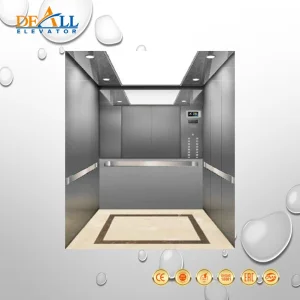
Standard configurations require a cabin depth of at least 2400mm and a width of 1500mm to accommodate intensive care beds, life support devices, and accompanying medical staff. Our lifts are fully customizable to meet these dimensions.
We construct exposed metal elements using marine-grade stainless steel (SUS316 or SUS304) and coat mechanical structures with high-durability epoxy. In addition, our control boards are sealed in IP54-rated control cabinets to prevent salty air from corroding electrical components.
Yes, our control cabinets support communication protocols such as BACnet, Modbus, and LonWorks, allowing for real-time monitoring of operation status, fault warnings, and remote control capabilities.
All our medical lifts feature an Automatic Rescue Device (ARD) powered by emergency batteries. If a power outage occurs, the ARD brings the elevator to the nearest floor and opens the doors, allowing patients and staff to exit safely.
Our elevators are CE certified, comply with European standard EN81, and can be customized to meet all requirements of the Korea Elevator Safety Agency (KoELSA) guidelines and KS standards.
 Ascom Elevator