 Ascom Elevator
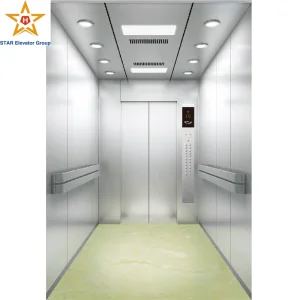
Engineered for unmatched speed, anti-bacterial hygiene control, and vibration-free bed transportation.
In recent years, the Togolese Republic has embarked on a comprehensive restructuring of its healthcare ecosystem. Guided by the National Health Development Plan (PNDS) and spearheaded by strategic public-private partnerships, major metropolitan centers like Lomé, Kara, and Sokodé are witnessing significant upgrades of their medical facilities. The modernization of the Centre Hospitalier Universitaire (CHU) Sylvanus Olympio, along with the establishment of newer, highly specialized private clinics, highlights a crucial trend: the transition from low-rise medical centers to high-capacity, multi-story healthcare complexes.
This vertical expansion demands highly specialized architectural transport systems. In Togo, the commercial market for hospital elevators has evolved beyond simple mechanical hoisting. Elevators are now considered critical components of life-saving care logistics. Unlike standard passenger elevators, a hospital elevator in West Africa must withstand unique environmental challenges. The coastal proximity of Lomé exposes mechanical equipment to intense salt spray, high humidity, and airborne sand particles. Consequently, medical infrastructure planners now prioritize factories that can supply robust, anti-corrosive stainless steel structures (primarily SUS304 or SUS316 grade) paired with tropicalized control units capable of operating reliably in high-temperature environments.
The international medical lift manufacturing sector is undergoing a profound paradigm shift, shifting away from standard gear systems toward Permanent Magnet Synchronous Motor (PMSM) gearless drives. These modern systems offer exceptional energy efficiency—consuming up to 40% less electricity—and guarantee smooth operations that are vital for patient care.
Globally, the installation of hospital lifts is strictly regulated by safety standards such as EN 81-20 and EN 81-70 (which covers accessibility rules). These regulations require precise leveling accuracy (within ±2 mm) to prevent any tripping hazards when moving stretchers, hospital beds, and sensitive medical imaging carts. Furthermore, modern medical elevators are expected to incorporate active air purification systems, including UV-C sterilization lamps and photocatalytic filters. These elements work together to eliminate airborne pathogens, ensuring the cab remains clean as patients travel between wards and sterile operating rooms.
| Standard Parameter | Standard Hospital Lift Requirement | Ascom Togo Market Compliance |
|---|---|---|
| Leveling Accuracy | ≤ ±5 mm (EN 81-20) | ≤ ±2 mm (High-precision encoder) |
| Cab Air Quality | Standard mechanical ventilation | Dynamic UV-C Sterilization & HEPA air purification |
| Power Grid Adaptation | Standard nominal voltage tolerance | AVR (Automatic Voltage Regulator) & ARD backup |
| Corrosion Resistance | Standard painted steel / basic SS | Marine-grade SUS304 / SUS316 with anti-corrosion coating |
West African municipal grids often present challenges like voltage fluctuations, power surges, and occasional power drops. To address this, Ascom Elevator has engineered customized control panels specifically for the Togolese market. Our systems feature integrated, high-capacity Automatic Rescue Devices (ARD). In the event of a power outage, the ARD automatically switches to battery power, safely moving the elevator cabin to the nearest floor and opening the doors to allow patients and medical personnel to exit safely.
Additionally, all electrical control boxes are tropicalized. This means the printed circuit boards (PCBs) are treated with a specialized conformal coating to protect them against high moisture levels, condensation, and corrosion from sea air. These custom specifications ensure that hospital elevators in Lomé operate with the same reliability as those in Paris, Shanghai, or New York, minimizing unexpected downtime and keeping critical transport systems online.
Managing patient flow during peak hours is a major challenge in large hospitals like CHU Campus. Ascom's intelligent group control system organizes elevator dispatches using real-time demand algorithms. This reduces wait times and ensures emergency calls from surgical suites instantly prioritize the closest available elevator, bypassing routine passenger calls.
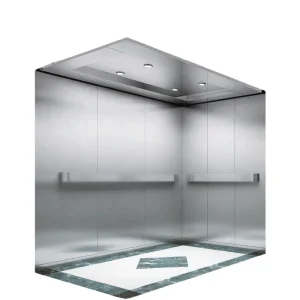
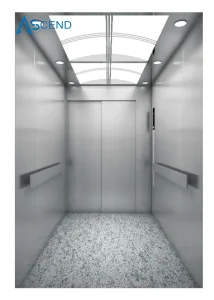
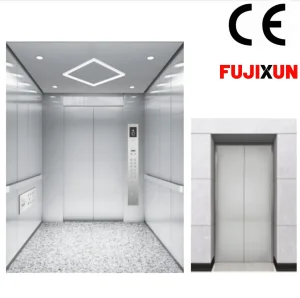
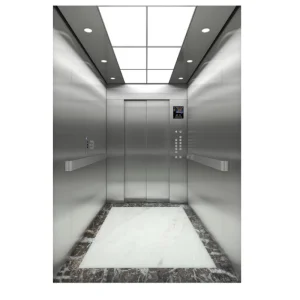
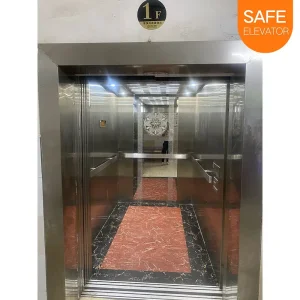
Inside the cabin, we prioritize health and safety. The walls are finished with advanced copper-alloy or silver-ion anti-bacterial coatings. These surfaces actively work to eliminate bacteria, viruses, and fungi, providing an extra layer of protection against healthcare-associated infections (HAIs). Handrails are designed to meet ergonomic guidelines, and the door systems are equipped with full-height multi-beam infrared light curtains. These light curtains detect even the smallest obstructions, preventing doors from closing on stretchers or IV poles.
A globally recognized manufacturer and supplier of passenger, home, and specialized medical elevators.
Ascom Elevator is a professional elevator manufacturer and supplier based in China, specializing in advanced Fuji Lifts & Elevators. Our diverse product portfolio covers passenger elevators, home elevators, panoramic sightseeing lifts, cargo elevators, escalators, and moving walks. Backed by state-of-the-art production facilities, strict quality control processes, and a dedicated international logistics network, we deliver customized, reliable vertical transport systems to projects across the globe, including key markets in Africa.
Manufactured to meet international standards for hospitals, diagnostic centers, and clinics in Togo.
Get answers to key technical questions about installation, standards, and adaptation to the West African climate.
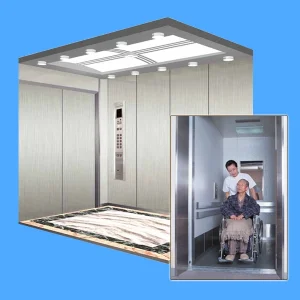
Generally, hospital bed elevators are designed to accommodate standard stretchers along with medical staff and equipment. The typical cabin width starts at 1300 mm to 1500 mm, with a depth of 2200 mm to 2400 mm, and a load rating of 1600 kg to 2000 kg. This size provides enough room to safely transport patients, stretchers, IV stands, and monitoring equipment.
We use high-grade SUS304 stainless steel for the structural components of our elevator cabs. For properties near Lomé’s coast, we recommend SUS316 stainless steel to prevent rust from salt spray. Additionally, we apply a moisture-resistant conformal coating to all electronic circuit boards (PCBs) and use IP54-rated control panels to prevent failures caused by high humidity.
All Ascom hospital elevators are equipped with an Automatic Rescue Device (ARD) and an Uninterruptible Power Supply (UPS). In the event of a power outage, the elevator uses battery backup to automatically travel to the nearest floor and open its doors, ensuring no patients or staff are trapped.
Yes, our elevators comply with EN 81-20/50 and CE standards. They are designed with precise floor leveling within ±2 mm, preventing gaps or shifts that could disrupt stretchers, beds, or sensitive patient transport.
Our elevators feature silver-ion and copper-alloy anti-bacterial finishes on cabin walls, handrails, and button panels. Additionally, active UV-C sterilization lights operate inside the cab during idle times to keep the environment clean and hygienic.


