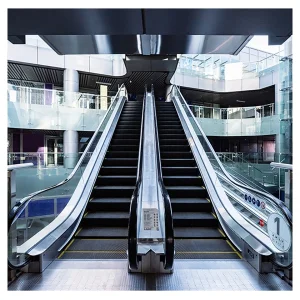
Explore our leading-edge heavy-duty components and specialized passenger transportation systems built for industrial and commercial environments.
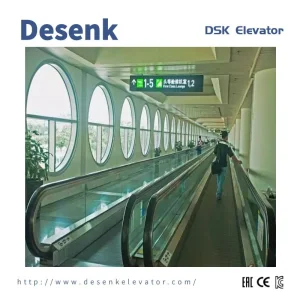
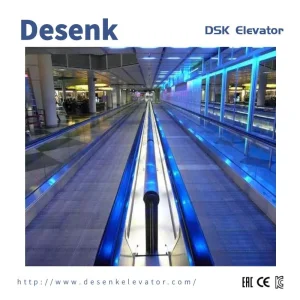
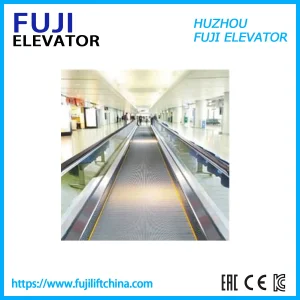
In the era of rapid urbanization, master-planned transit networks demand seamless, uninterrupted horizontal pedestrian systems. Traditional passenger conveyance is no longer sufficient for contemporary airports, multimodal train terminals, and massive exhibition parks. Modern moving walks (also known as autowalks or travelators) represent the structural backbone of high-efficiency pedestrian traffic management.
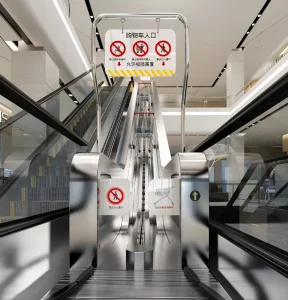
From micro-mobility engineering within smart airports to integrated shopping cart transport systems in multi-tiered hypermarkets, these systems optimize foot traffic distribution, reduce physical strain on travelers, and dynamically adapt to real-time crowd densities. By employing state-of-the-art Variable Voltage Variable Frequency (VVVF) drive configurations, developers can achieve up to 45% reduction in localized grid consumption while maintaining superior service levels.
The procurement landscape for vertical and horizontal mobility is highly consolidated, demanding compliance with strict regional directives. The European Union relies heavily on EN 115-1:2017 safety mandates, while North American markets dictate adherence to ASME A17.1 / CSA B44. Simultaneously, the Asia-Pacific region, spearheaded by rapid Chinese infrastructure buildouts, mandates adherence to GB 16899 benchmarks.
Global developers face complex procurement criteria where manufacturing turnaround time, structural metalwork anti-rust longevity, component availability, and engineering support are critical. Choosing the correct supplier necessitates evaluating not just structural specifications, but the exporter's capacity to facilitate global logistics, on-site safety commissioning, and long-term diagnostic updates.
A technical assessment of the world's leading moving walk manufacturers, comparing drive methodologies, application specializations, and structural reliability.
| Manufacturer Archetype | Primary Technology Focus | Structural Deflection Limits | Target Segment | Max Length Capabilities |
|---|---|---|---|---|
| Ascom Elevator (China) | Eco-efficient VVVF, Intelligent Auto-Start, Fuji Collaboration | 1/1000 (Ultra-Stiff) | Metropolitan Hubs, Airports, Supermarkets | Up to 150 Meters |
| German Engineering Conglomerates | High-Velocity Linear Drive Systems | 1/750 | Inter-terminal Airport Connectors | Up to 200 Meters |
| Japanese Precision Specialists | Permanent Magnet Synchronous Motors (PMSM) | 1/1000 | Intense Commercial Districts | Up to 120 Meters |
| American Industrial OEM Brands | Heavy-Duty Outdoor Structural Systems | 1/750 | Public Transit Walkways | Up to 100 Meters |
| Nordic Custom Engineering Houses | Space-Optimized Pitless Configurations | 1/800 | Retail Renovations & Historical Sites | Up to 80 Meters |
| Southern European Exporters | Architectural Design & Aesthetic Framing | 1/750 | High-End Shopping Malls | Up to 60 Meters |
| Korean Mechanical Innovators | Dynamic Multi-Speed Walkways | 1/900 | Urban Sky-Bridges & Mass Transit | Up to 140 Meters |
| East-Asian High-Volume Exporters | Standardized Modular Systems | 1/750 | Regional Supermarkets & Warehouses | Up to 100 Meters |
| UK Transit Solution Designers | Acoustic-Dampened Noise Reduction Systems | 1/800 | High-Density Quiet Zones | Up to 90 Meters |
| Swiss Premium Engineering Firms | Predictive Edge Maintenance Frameworks | 1/1000 | High-Volume Public Infrastructure | Up to 180 Meters |
Ascom Elevator is a professional Elevators Manufacturer and Supplier in China, operating under the rigorous guidelines of Fuji Lifts & Elevators technology systems. Our commercial and industrial output encompasses Passenger Elevators, Home Elevators, Panoramic Elevators, Cargo Elevators, Escalators, and specialized Shopping Cart Escalators designed for global transport hubs.
By utilizing robust material science, precision assembly tracks, and state-of-the-art structural components, we ensure that every unit meets strict global standards. Our integration of VVVF variable frequency drives and automatic standby operations results in equipment that reduces environmental impact while optimizing the total cost of ownership (TCO) for developers and building operators.
Global Locations
Serving Customers
Safety Record
A deep dive into structural profiles, drive dynamics, and localization frameworks for global infrastructure projects.
The structural truss of a moving walk is engineered to withstand dynamic loads over decades. It is welded using high-tensile structural steel profiles, protected with anti-rust coatings, or completely hot-dip galvanized for outdoor settings. Standard deflection metrics are kept at 1/750 of the span, but can be customized to 1/1000 to reduce vibration and extend component lifespan under heavy passenger loads.
The pallet assembly is crucial for passenger safety. Made from high-pressure die-cast aluminum alloy or stainless steel, these pallets feature narrow, deep grooves that mesh cleanly with the comb plates at the entrance and exit zones. This tight clearance helps prevent thin items, footwear, or luggage straps from catching in the machinery, reducing potential hazards.
Modern travelators use high-efficiency drive units, often combining high-torque helical gearboxes with Permanent Magnet Synchronous Motors (PMSM) or variable speed VVVF configurations. Integrated photoelectric sensor networks monitor passenger flow. When the platform is clear, the system slows down or enters an idle standby mode, minimizing power draw and component wear.
Additionally, regenerative drive modules can capture kinetic energy generated during downward transport and feed it back into the facility's power grid. This functionality is highly valued by developers seeking international environmental certifications such as LEED or BREEAM.
To successfully export heavy industrial products globally, manufacturers must secure certifications relevant to each destination market. These include CE marking for European regions, ASME safety compliance for North America, and EAC certifications for the Eurasian Economic Union. Equipment must also comply with national electromagnetic compatibility (EMC) standards to prevent interference with airport communications or commercial signaling networks.
On-site execution requires close collaboration with local licensed engineering contractors. Leading suppliers provide digital configuration files, structural anchor layouts, wiring diagrams, and direct technical support to ensure seamless local inspection approvals and secure operating permits.
Reliable operations depend on rigorous pre-commissioning testing. This includes checking structural alignments, measuring pallet level tolerances, testing safety brake deceleration profiles, and evaluating noise levels under full load. Manufacturers ensure that mean time between failures (MTBF) remains high by using quality-tested components.
Ongoing maintenance is backed by service level agreements (SLAs), ensuring prompt access to replacement parts, diagnostic software, and technical assistance. This system helps minimize downtime and supports the continuous operation of high-traffic transit pathways.
An overview of coming advancements in horizontal transportation, focusing on IoT diagnostics, real-time safety sensors, and smart materials.
Incorporating vibration and temperature sensors along the drive shaft and handrail guides allows for continuous monitoring. Performance data is sent directly to cloud systems, identifying signs of component wear early to prevent unexpected downtime.
Future systems will integrate with overhead cameras and AI flow monitors. When large crowds exit arriving flights, the moving walks can dynamically adjust their speeds to optimize throughput and keep transit lanes moving efficiently.
Engineers are working with new light-weight composite materials and eco-friendly lubricants. These developments reduce overall machinery weight, lower friction losses, and help transit systems meet increasingly strict global environmental standards.
Get professional answers to common questions about engineering, installing, and certifying commercial moving walks.
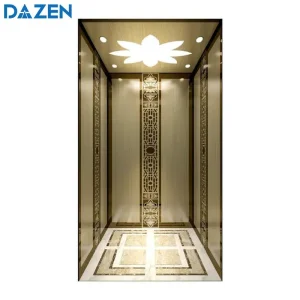
Explore our industrial cargo solutions, custom residential elevator cabins, and automated commercial escalators designed for high-density public facilities.
 Ascom Elevator