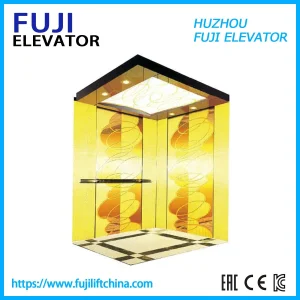
Explore our foundational range of heavy-duty, commercial, and residential lift technologies, built to international engineering standards.
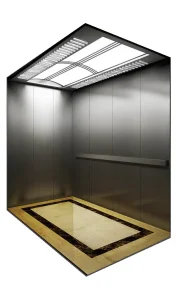
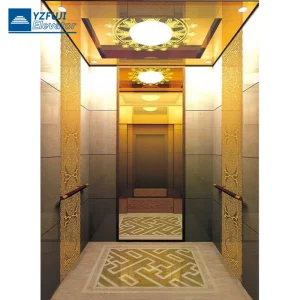
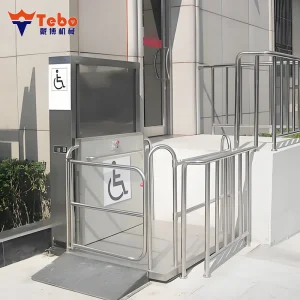
Ascom Elevator is a professional Elevators Manufacturers and Suppliers in China, Fuji Lifts & Elevators. Our engineering competence covers design, fabrication, custom configurations, and global exportation.
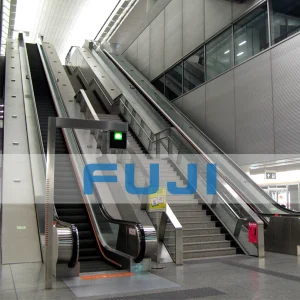
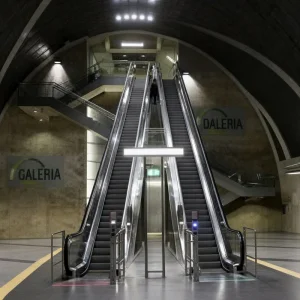
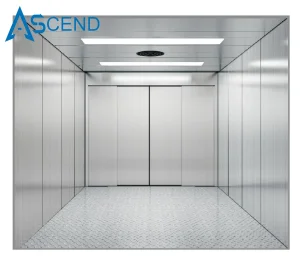
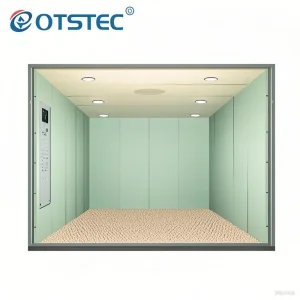
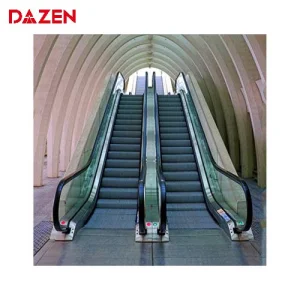
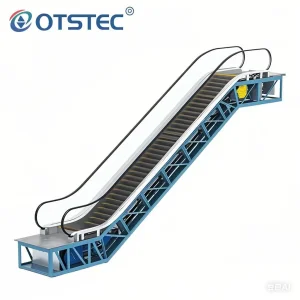
With deep integration of modern digital systems, we supply a versatile portfolio. Our range includes Passenger elevators, Home elevators, Panoramic sightseeing lifts, high-capacity Cargo lifters, advanced Escalators, and specialized Shopping cart travelators.
Every system we manufacture is built with zero-compromise safety devices, primarily utilizing advanced elevator light curtains. These devices generate a dense web of multi-beam infrared protection fields, guaranteeing touchless object recognition and passenger safety.
Our manufacturing conforms directly to EN 81-20/50, ASME A17.1, and GB7588, ensuring our exported systems are pre-approved for local inspection bodies in Europe, the Americas, and APAC.
An in-depth review of safety optics, sensor densities, and preventative hazard systems for commercial projects.
An elevator light curtain is a high-precision optoelectronic safety device designed to monitor elevator entrance zones. Operating through a dense matrix of transmitter and receiver elements, it emits invisible infrared beams across the door frame. If any beam is interrupted by a passenger, pet, or object, the lift control unit halts the closing sequence immediately and commands the door to slide open again. Unlike primitive mechanical safety edges, this system operates entirely without physical contact, dramatically reducing accidental impact and physical wear.
Modern lift systems handle complex occupancy patterns in high-traffic commercial environments. Basic dual-sensor arrangements leave vast blind spots at lower floor levels or higher clearance heights. Top-tier manufacturers utilize multi-beam patterns containing from 94 up to 154 intersecting light channels to eliminate these gaps. These beams continuously adapt through intelligent cross-crossing algorithms, providing active, layered safety barriers that can detect objects thinner than a pencil.
| Technical Criteria | Standard Curtains (Basic Safety) | High-Spec Light Curtains (EN 81-20 Compliant) | ASCOM Advanced 3D Safety Array |
|---|---|---|---|
| Beam Density | 32 to 64 Beams (Parallel) | 94 to 154 Beams (Cross-Cross Array) | Up to 174 Interlaced Intelligent Beams |
| Detection Technology | 2D Static Matrix | 2D Adaptive Matrix | 3D Spatial Detection + Dynamic ToF Option |
| Response Time | < 150 ms | < 65 ms | < 45 ms Ultra-Fast Relay output |
| Sunlight Immunity | Low (Susceptible to glare) | Up to 50,000 Lux | Up to 100,000 Lux (Active Filtering) |
| IP Protection Rating | IP54 | IP65 (Dust & Water Resistant) | IP67 (Sealed for Heavy Commercial & Outoor Lifts) |
Engineering departments and property procurement offices look for specific design characteristics when choosing their parts suppliers:
Elevator safety technology is shifting from basic physical barriers to preventative, cloud-connected visual systems.
Required physical pressure to open closing doors, resulting in equipment wear and passenger bruising.
Non-contact safety field introduced, but occasionally triggered by dust buildup or solar glare.
Allows detection before passengers step through the doorway. Features self-adjusting beams for damaged channels.
Features remote diagnostic reporting, predictive alignment alerts, and seamless integration with smart building networks.
International regulations demand strict testing of door safety devices. ASCOM systems ensure straightforward site inspection approvals.
This European safety standard requires door protection arrays to detect obstacles as small as 50mm in diameter. The system must cover the opening from 25mm up to 1600mm above the sill level.
American standards focus on accessible, safe entry times for wheelchair users, disabled passengers, and hospital stretchers. Multi-beam configurations prevent premature door closure and keep pathways open for boarding.
Our products undergo extensive lifecycle stress tests, logging over 10 million cycles under extreme temperature environments (-20°C to +65°C), securing CE, FCC, and RoHS certifications.
Select a category below to view specific mechanical configurations, custom sizes, and technical manuals.
Detailed answers to key queries on elevator safety technology, performance standards, and component options.
A 2D light curtain detects obstacles directly within the path of the sliding doors. A 3D light curtain projects an additional detection zone into the landing area outside the lift car, sensing approaching passengers before they reach the door sill.
High-spec light curtains feature smart diagnostic systems that adjust receiver sensitivity when dust build-up is detected. If individual channels are completely blocked, the system can temporarily disable them while maintaining safe operation on the remaining channels, preventing unexpected lift shutdowns.
Yes. Our elevator safety components are designed with flexible electrical interfaces. Supporting both direct and indirect voltage options, they integrate with major controller brands including Otis, Kone, Schindler, Thyssenkrupp, and Mitsubishi controllers.
Safety edges used in the EU must comply with EN 81-20/50 regulations. This requires them to detect small obstacles and maintain functional safety under specific EMC (electromagnetic compatibility) conditions, backed by official CE certification.
We apply narrow-band optical filters over the receiver diodes, along with coded light signaling. This filters out natural sun glare up to 100,000 Lux, allowing the receiver to detect only the light emitted from the transmitter.
A higher beam count increases safety coverage. To prevent scanning delay with higher densities, our light curtains use fast microprocessor processing to scan 154 beams in under 45 milliseconds, ensuring swift detection.
Browse our selection of heavy-duty public transit machinery, customized warehouse lifts, and specialized commercial lifts.
 Ascom Elevator