Engineered specifically to accommodate high-altitude operations, off-grid power fluctuations, and robust commercial usage profiles.
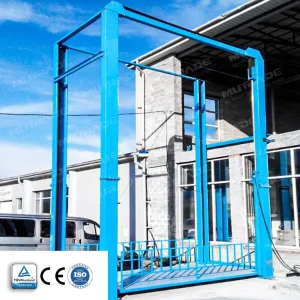
Analysis of the terrain, infrastructure demands, and automotive transport requirements in the Maloti Highlands.
Lesotho, geographically distinctive as the "Kingdom in the Sky," sits entirely above 1,400 meters in elevation. This unique topography shapes not only the physical climate but also the structural parameters of urban development. In cities like Maseru, Leribe, and Mafeteng, rapid commercial growth meets severe spatial constraints. As modern multi-tier car dealerships, commercial parking complexes, and private villas expand vertically, space-saving car elevators have transformed from luxury additions to core infrastructural assets.
Exporting car elevator systems to Lesotho requires rigorous engineering adjustments that standard European or Asian platforms often lack. First, the lower atmospheric pressure at high altitudes directly impacts motor cooling efficiency and oil aeration dynamics in hydraulic cylinders. Our manufacturing process specifically integrates oversized cooling fins, thermal feedback loops, and high-viscosity-index ISO VG 46/68 oils to prevent pump cavitation and operational drift during continuous cycles.
Additionally, electrical grids in southern Africa require equipment configured for broad voltage tolerances. We integrate smart PLC controllers with phase-monitoring relays to defend the vertical transit systems from brownouts and frequency drops common in remote municipal supplies.
Ensuring compliance with SADC, European Union, and international safety frameworks.
When engineering and exporting car elevators for commercial centers or luxury residential projects in Lesotho, local developers look to key regulatory codes. Principal among these is SANS 1545 (South African National Standards) and European Directive EN 81-20/50. As an international manufacturing exporter, we design every component, from robust guide-rail assemblies to dual-safety hydraulic rupturing valves, to pass strict international third-party certifications (TUV, CE, SGS).
Choosing the correct drive mechanism is critical to long-term lifecycle costs and building space utilization. The comparison matrix below outlines the performance characteristics of our primary drive systems engineered for Lesotho's terrain:
| Drive Mechanism | Optimal Height Range | Load Capacity Range | Structural Footprint Requirement | Energy Recovery Option |
|---|---|---|---|---|
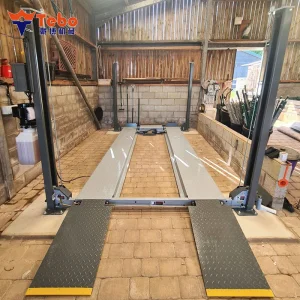
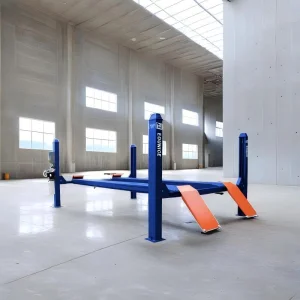
| Hydraulic 4-Post System | 2 - 4 Floors (Up to 12m) | 3,000kg - 6,000kg | Minimal structural load on walls | No (Direct displacement) |
| Heavy-Duty Traction VVVF | 3 - 10 Floors (Up to 30m) | 3,000kg - 10,000kg | Requires robust shaft enclosure | Yes (Regenerative braking) |
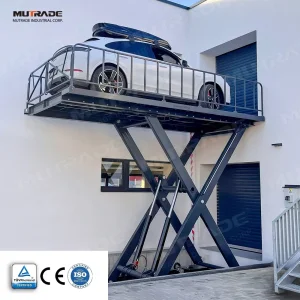
| Hydraulic Scissor Mechanism | 1 - 2 Floors (Up to 6m) | 2,000kg - 15,000kg+ | Requires deep pit, no wall guide rails | No |
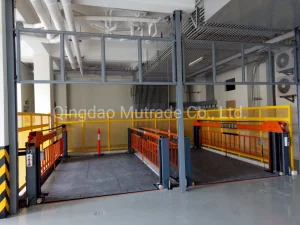
Our engineering services specialize in customizing platform widths and entry-exit designs (through-car configurations, 90-degree turning platforms, and tilting mechanisms) to fit space-constrained parking garages and multi-level automotive showrooms.
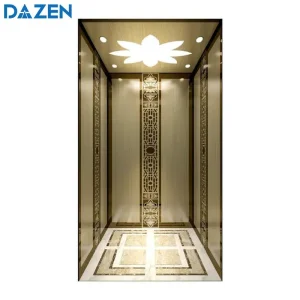
Ascom Elevator is a professional Elevators Manufacturers and Suppliers in China, Fuji Lifts & Elevators. Our manufacturing ecosystem covers a comprehensive catalog of Passenger elevators, Home elevators, Sightseeing elevators, Cargo elevators, Escalators, and Shopping cart escalators. Serving global distribution networks, we optimize vertical transit systems for durability, energy savings, and safety.


An engineer's manual for planning elevator pits, structural columns, and power infrastructure.
Installing industrial-grade car lifts requires systematic coordination with structural engineers and concrete pour teams. At Ascom, our technical export team delivers detailed pre-installation drawings covering the following mechanical parameters:
The foundation pit must handle substantial static loads. A typical 3,000kg capacity car lift requires a minimum pit depth of 1,200mm to 1,500mm. Given the mountainous runoff patterns in Lesotho, pits must be designed with continuous moisture sealing and active sump pumps. This protects high-performance hydraulic cylinders and electrical cabling systems from moisture damage.
Unlike standard cargo lifts, car lifts carry uneven load distributions during entry and exit. The guide rails must be anchored to reinforced concrete walls or steel support frames capable of absorbing dynamic eccentric forces. For regions with seismic activity risks near the Drakensberg range, our designs feature reinforced guide-rail brackets and safety interlocks.
Our car elevators operate on a 380V/400V three-phase 50Hz supply. To address voltage stability issues, we offer optional automated backup power control cabinets. These systems communicate with local backup generators, safely lowering the elevator car to the nearest landing during power switchovers.
Technical answers for structural engineers, project managers, and property developers in Lesotho.
Explore our technical range, built to handle heavy loads, tight spaces, and high-performance requirements.
 Ascom Elevator