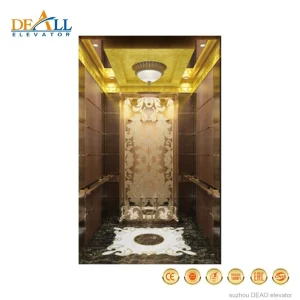
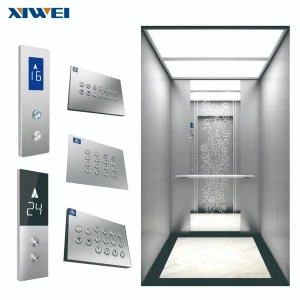
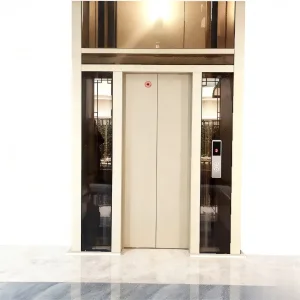
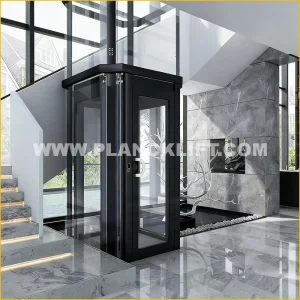
Explore our premium range of commercial, medical, residential, and heavy cargo elevators engineered with industry-leading frequency inverter technology.
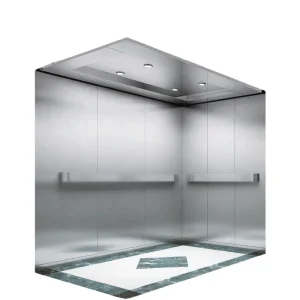
In the global vertical transportation sector, the elevator inverter—commonly referred to as the Variable Voltage Variable Frequency (VVVF) drive—functions as the system's central nervous system. It orchestrates velocity curves, torque distribution, energy conservation, and system safety. As high-density urban areas demand taller, faster, and more energy-efficient structures, the demand for highly reliable elevator drives has surged.
China's industrial sector has moved beyond basic manufacturing to become a leading global supplier of elevator inverters. Leveraging advanced R&D and supply chain integration, Chinese factories produce drives that control ride comfort while achieving significant energy savings.
As a leading manufacturer and exporter, Ascom Elevator integrates advanced VVVF frequency control technology with structural design. By bridging the gap between mechanical design and power electronics, we supply drive and control solutions tailored to passenger lifts, panoramic observation elevators, high-capacity cargo elevators, and commercial moving walks.
The manufacturing of modern elevator inverters requires high levels of precision. Leading Chinese factories utilize Industry 4.0 paradigms to deliver high-quality products. They feature dust-free SMT (Surface Mount Technology) cleanrooms, robotic component placement, and fully automated testing bays.
Our inverter electronics are built on multi-layer PCBs assembled using high-speed SMT lines. Every board undergoes Automated Optical Inspection (AOI) and In-Circuit Testing (ICT). This ensures that solder joint integrity, gate driver pathways, and capacitor placement meet international standards.
To maintain reliability, assembled inverters undergo rigorous testing. They are subjected to temperature cycle chambers (ranging from -20°C to +60°C) and full-load burn-in tests. This process screens out early semiconductor defects, helping to prevent field failures after installation.
Our manufacturing facilities are situated within integrated electronics clusters. This proximity enables efficient sourcing of essential components, including:
Modern urban environments require custom lift configurations. An elevator inverter must adapt to various loads, speed profiles, and usage patterns.
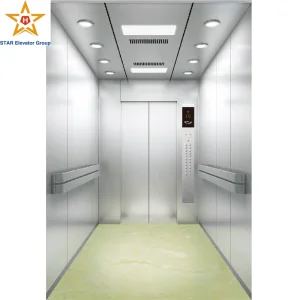
Medical elevators require smooth movement profiles. Our medical stretchers utilize dedicated VVVF algorithms to minimize vibration and acceleration jerks during start and stop. This design protects critically ill patients and keeps cabins level with landing floors within millimeters.
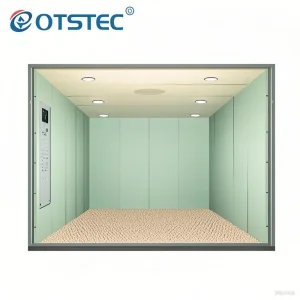
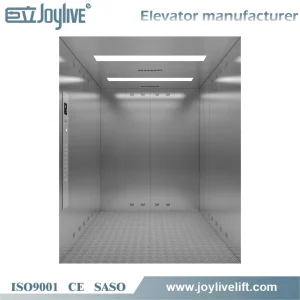
Freight lifts carrying loads up to 10,000 kg require high torque at zero speed. Our inverters utilize closed-loop vector control, collecting feedback from rotary encoders to generate maximum torque at 0 Hz. This prevents rollback when heavy cargo enters or leaves the platform.
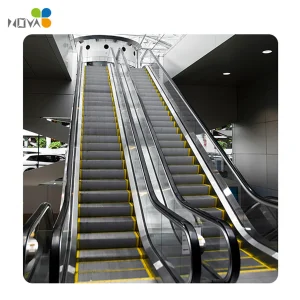
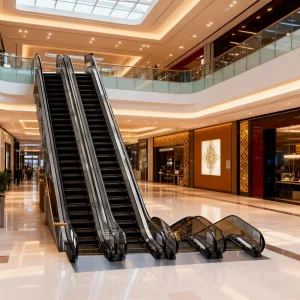
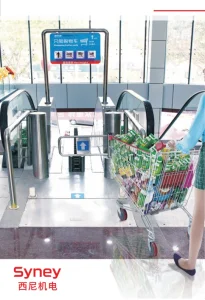
Shopping centers and transport hubs operate under varying load conditions. Intelligent speed modulation reduces energy use. The inverter runs at a low standby speed when no passengers are present and accelerates smoothly when optical sensors detect a rider approaching.
Elevator control technology is evolving, driven by energy efficiency goals, IoT connectivity, and functional safety standards.
Standard elevators dissipate deceleration energy as waste heat through braking resistors. Our AFE regenerative units convert mechanical braking energy into clean AC electricity and return it to the building's microgrid. This design reduces heat build-up in machine rooms and lowers net power consumption by up to 35%.
By integrating LTE/5G wireless modules directly into the drive's controller, we enable continuous data streaming to cloud-based diagnostic platforms. AI algorithms analyze key parameters, including:
Our drives feature integrated Safe Torque Off (STO) and Safe Brake Control (SBC) inputs. These hardware-level safety features isolate the motor's power supply without needing traditional output contactors. This reduces audible noise, saves space, and meets strict EN 81-20/50 safety standards.
Sourcing elevator components from overseas requires careful evaluation of safety certifications and technical compatibility.
International projects require adherence to local building codes. Our elevator and inverter components hold certifications including CE (European Conformity), CAC/CE Approval, and compliance with the EN 81 elevator code.
High-frequency inverter switching can introduce electrical noise into building power grids. Our systems feature integrated Class C2/C3 EMC filters and DC reactors. These components reduce Total Harmonic Distortion (THD), preventing interference with building communications and computing networks.
Global installations require reliable local support. We provide comprehensive documentation, step-by-step commissioning guides, and direct access to field application engineers (FAE). Our support team assists with tuning acceleration curves, configuring brake delay timers, and troubleshooting encoder feedback issues remotely.
A1: Open-loop inverters regulate motor speed based on internal calculations without checking the actual shaft speed. They are suitable for escalators and simple cargo lifts. Closed-loop inverters receive real-time speed feedback from a motor encoder, enabling high speed-accuracy and smooth acceleration curves, which are essential for high-speed passenger elevators.
A2: Regenerative drives capture kinetic energy during deceleration and heavy-load descents, feeding it back into the building's electrical system. This reduces net power consumption and supports compliance with building energy conservation codes, contributing points toward green building certifications.
A3: Our inverters feature wide input voltage tolerances, built-in surge protection, and dynamic braking resistors. The internal control card is protected with a conformal coating, which prevents damage from dust, humidity, and minor electrical overloads.
A4: Yes, our inverters support standard communication protocols, including CANbus, Modbus, and Profibus. They also feature analog and digital I/O channels, enabling integration with major elevator control platforms worldwide.
Choose from our specialized structural and electronic system applications, engineered for high reliability, long service life, and optimal efficiency.
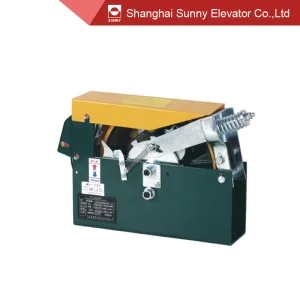
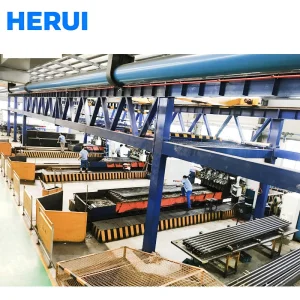
Explore our heavy-duty freight lifts, guide rail production tools, safety governors, and architectural cabins designed to optimize vertical systems.
 Ascom Elevator