Elevator accessibility for disabled people is a pivotal issue that deserves immediate attention. According to the World Health Organization, over one billion people live with disabilities globally. This group often faces significant barriers in public spaces, especially in buildings lacking adequate elevator access. How to ensure elevator accessibility for disabled people is not merely a technical challenge; it embodies our commitment to inclusivity.
Many existing elevators do not meet the standards set by the Americans with Disabilities Act (ADA). In fact, a report by the National Elevator Industry, Inc. indicates that about 20% of elevators in the United States are not fully compliant. This highlights a pressing need for improvement. Additionally, the design of many buildings does not prioritize accessibility, creating further obstacles for those with mobility challenges.
Enhancing elevator access is a multifaceted endeavor. It requires comprehensive audits, better design practices, and continuous public awareness campaigns. While progress has been made, many communities remain behind. We must reflect on how, as a society, we can bridge these gaps. Embracing technology and innovation is essential for a more accessible future.
Current Accessibility Standards for Elevators
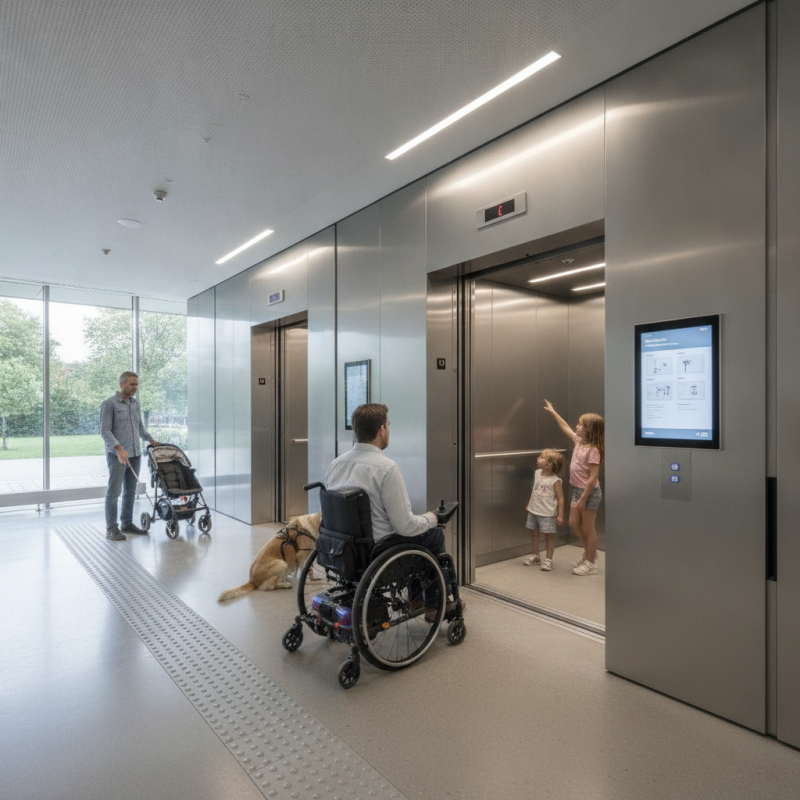
Elevator accessibility is crucial for ensuring that disabled individuals can navigate buildings freely. The Americans with Disabilities Act (ADA) outlines specific standards for elevator design. This includes a minimum interior size of 51 inches deep by 68 inches wide to accommodate wheelchairs. The call buttons should be positioned between 15 to 48 inches above the floor, making them reachable for everyone.
However, many elevators still fall short of these standards. A report by the National Elevator Industry, Inc. indicates that 23% of elevators in older buildings do not comply with current accessibility requirements. This gap emphasizes the need for upgrades in many existing facilities. Regular audits should be conducted to assess compliance levels.
Tips: Ensure elevators are well-maintained. A malfunctioning elevator can leave disabled individuals stranded. Compliance with standards should be prioritized in renovation projects. Training staff on accessibility features can enhance the experience for all users. Regularly assess whether the features meet the evolving needs of the community.
Current Accessibility Standards for Elevators
Common Challenges Faced by Disabled Individuals in Elevator Use
Elevators serve as vital links for many disabled individuals. However, numerous challenges often hinder their accessibility. A common issue is the inadequate size of elevator cabins. Many designs do not accommodate wheelchairs or mobility aids effectively. This can create discomfort and limit independence.
Another significant challenge lies in user interface accessibility. Buttons placed too high or far away can make it difficult for those with limited reach. Additionally, auditory signals are often absent, leaving visually impaired individuals uncertain about their stop. Many disabled users report feeling anxious when using elevators, highlighting a pressing need for thoughtful design.
Moreover, maintenance plays a crucial role in accessibility. Broken elevators disproportionately affect disabled persons, limiting their mobility. Regular checks and quick responses to repairs are essential. Accessibility features must not only exist but also function properly. Ensuring that elevators are user-friendly and reliable is fundamental for empowering disabled individuals in public spaces.
Ensuring Elevator Accessibility for Disabled People: How Can We Improve?
| Challenges |
Description |
Potential Solutions |
| Inadequate Space |
Many elevators lack sufficient space for wheelchairs, making them inaccessible. |
Redesign elevators with more spacious interiors and wider doors. |
| Poor Signage |
Insufficient or confusing signage can make elevators difficult to locate. |
Implement clear, large print and braille signage at appropriate heights. |
| Lack of Visual & Auditory Cues |
Elevators often do not provide audio indicators or visual displays for floors. |
Install audio announcements and visual floor indicators with high contrast. |
| Maintenance Issues |
Frequent breakdowns can prevent access for disabled users. |
Regular maintenance checks and quick repair responses to minimize downtime. |
| Insufficient Training for Staff |
Staff may not know how to assist disabled users effectively. |
Provide training programs focused on disability awareness and assistance. |
Innovative Solutions for Enhancing Elevator Accessibility
Elevator accessibility for disabled individuals remains a pressing issue. According to the World Health Organization, over a billion people live with disabilities globally. This highlights the urgent need for innovative solutions in elevator design and operation.
One promising approach involves the adoption of smart technology. Incorporating sensors and AI can enhance user experience. For instance, real-time feedback systems can inform users about elevator availability and help adjust service accordingly. Additionally, voice-activated controls simplify usage for individuals with limited mobility. Reports indicate that such innovations have reduced wait times by up to 30% in pilot programs.
Tips for improving elevator accessibility include regular training for staff on assisting disabled users. Building operators should also conduct routine checks on technology functionality to ensure reliability. Furthermore, engaging with the disabled community can provide valuable feedback for continuous improvement. Listening to users is key, as their experiences can reveal practical adjustments that make a big difference. Prioritizing these changes could help create a more inclusive environment for everyone.
Best Practices from Accessible Elevator Designs Worldwide
Elevator accessibility for disabled individuals is crucial for equal mobility. Many designs around the world illustrate effective strategies. For instance, wider doors allow easier entry for wheelchair users. The buttons should be within reach for those seated or standing. Using tactile indicators helps visually impaired individuals navigate.
In some regions, voice-assisted technology is integrated into elevators. This feature enhances the overall experience for users with disabilities. However, not all elevators are equipped with this technology. It highlights a gap in providing comprehensive accessibility. Feedback from users often points out that waiting times in busy buildings can deter usage.
An emphasis on clear signage can also improve accessibility. Bold fonts and contrasting colors aid those with visual impairments. Yet, many elevators still lack these essential features. Regular audits of elevator systems could identify shortcomings. Continuous improvement should be a priority to meet diverse needs effectively.
Future Trends in Elevator Technology for Disability Inclusion
Elevators are crucial for accessibility, especially for individuals with disabilities. Future trends in elevator technology aim to enhance this accessibility. According to recent industry reports, the global market for accessibility solutions in elevators is expected to reach $4 billion by 2025. This growth reflects an increasing awareness of disability inclusion.
One promising development is the integration of smart technology. Voice-activated systems and AI can help users navigate elevators with ease. For instance, certain elevators now utilize touchless sensors. This minimizes physical contact, which is essential for those with mobility impairments. These technologies improve user experiences but often require higher costs for installation and maintenance.
Moreover, modular elevators are gaining traction. They are easier to install in existing buildings. Reports indicate that retrofitting older structures with modern lifts could increase access for 20% of urban populations with disabilities. However, not all buildings prioritize these upgrades. This creates a divide in accessibility standards. While advancements are made, consistent implementation remains a challenge that needs greater focus.
FAQS
: Elevators must be at least 51 inches deep and 68 inches wide. This size accommodates wheelchairs effectively.
Call buttons should be positioned between 15 and 48 inches above the floor for easy access.
About 23% of older elevators do not comply with current accessibility requirements. Upgrades are essential.
Well-maintained elevators prevent malfunctions, which can leave disabled users stranded and frustrated.
Training staff on accessibility features enhances user experiences and aids individuals with disabilities.
Smart technology, like voice activation and touchless sensors, improves navigation for users with mobility challenges.
Modular elevators are easier to install, making it possible to retrofit older structures for better accessibility.
The market for accessibility solutions is expected to reach $4 billion by 2025, indicating growing awareness.
While technology improves, consistent implementation remains a challenge, resulting in uneven accessibility standards.
Retrofitting older structures could enhance access for 20% of urban residents living with disabilities, creating a significant impact.
Conclusion
Ensuring elevator accessibility for disabled people is a critical issue that requires attention to current standards and innovative solutions. Despite existing accessibility regulations, many disabled individuals encounter challenges in using elevators, such as inadequate dimensions, lack of auditory and visual aids, and poorly designed controls. To address these barriers, incorporating features like tactile buttons, voice-activated systems, and larger cabin spaces can significantly enhance accessibility.
Looking globally, best practices from accessible elevator designs highlight the importance of user-centric approaches that prioritize ease of use. As we look to the future, advancements in technology promise to further improve accessibility, including smart elevators that adapt to users' needs. Ultimately, understanding how to ensure elevator accessibility for disabled people not only improves their mobility but also fosters inclusivity in urban environments.

 Ascom Elevator