Choosing an elevator is not merely a question of speed, price, or available shaft space. It affects energy use, passenger comfort, maintenance access, construction risk, and long-term operating costs. This is why facility owners often ask, “How to choose between hydraulic and traction elevators?” The answer depends on the building’s height, traffic pattern, climate, budget, and future use.
The U.S. Department of Energy’s Building Technologies Office reports that elevators and escalators can consume approximately 2% to 10% of a building’s energy. That range makes efficiency worth examining, especially in hospitals, hotels, and busy offices. Hydraulic elevators may suit low-rise buildings, where simpler equipment and lower initial costs can be valuable. However, they may require more energy during upward travel and need careful attention to fluid temperature and leakage prevention. Traction systems usually fit taller buildings and heavier traffic. They can provide smoother acceleration, higher speeds, and regenerative energy options, but their machinery and controls may increase installation complexity.
Elevator historian Dr. Lee Gray offers a useful reminder: “Elevators are the most used form of public transportation in the world.” His statement highlights the human side of this decision. A system that looks efficient on paper may feel uncomfortable at 8:30 a.m., when passengers crowd the car and doors cycle repeatedly. ASME A17.1/CSA B44 requirements also influence design, inspection, and safety planning. Still, codes do not choose the system for you. No checklist removes every uncertainty. This guide compares ten practical factors, including lifecycle cost, travel height, energy performance, maintenance, noise, and emergency planning, so decision-makers can question assumptions before signing a specification.
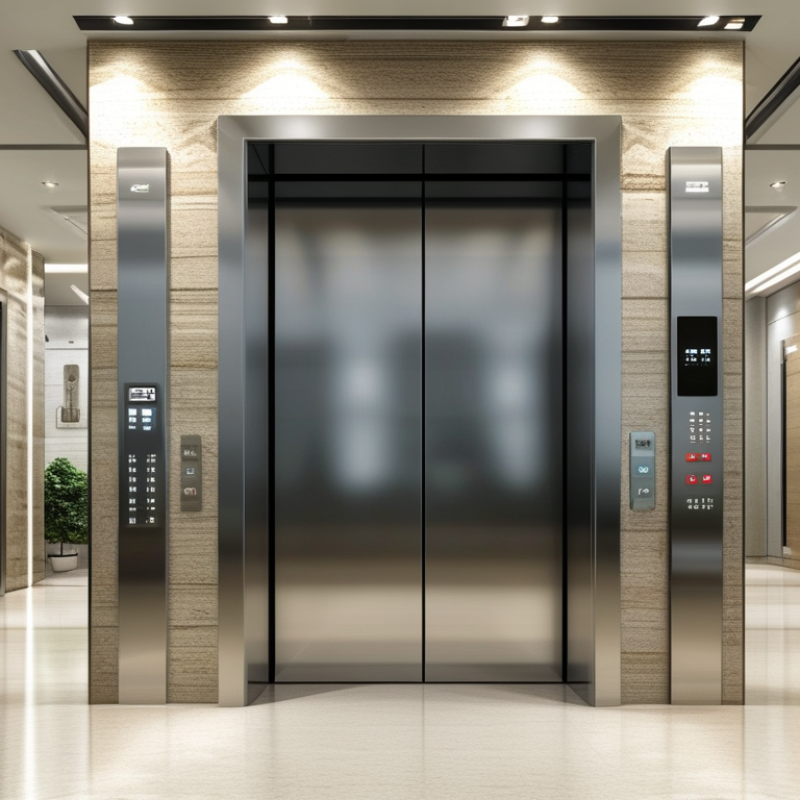
Choosing between hydraulic and traction elevators starts with building height. For many buildings up to six floors, hydraulic systems remain practical and cost-conscious. Their car moves through a cylinder, creating a steady, familiar ride. They often need more pit depth and a separate machine space. Check soil conditions, available equipment space, local codes, and expected traffic before deciding.
Above six floors, traction systems usually become the stronger option. Steel ropes and counterweights move the car efficiently through taller shafts. They typically offer better speed, smoother service during busy periods, and lower energy use during repeated travel. Review travel distance, peak traffic, standby loads, emergency access, and maintenance routes. Ask installers to explain brake testing, rope inspection, controller access, and backup operation in plain language.
Height is only one factor. That rule is useful, but imperfect. A five-floor hotel with heavy luggage may need traction performance, while a quiet seven-floor building may not. Compare ten points: height, speed, traffic, energy, pit depth, overhead space, noise, climate, maintenance, and budget. Request measured data, not broad promises. Visit an operating installation if possible. Listen for vibration, door hesitation, and pump noise. Small details matter. I would also question optimistic energy estimates, because real usage depends on passengers, weather, and service habits. A competent elevator engineer should verify the design before procurement.
Choosing hydraulic or traction elevators starts with capacity, not preference. ASME A17.1 establishes safety requirements, rated loads, and related design controls for elevator systems. The applicable local edition and authority requirements still need verification.
A hydraulic elevator may suit a low-rise building with moderate traffic and heavier loading. Traction equipment often supports taller buildings and frequent service more efficiently. Yet neither option should be selected from floor count alone. Estimate population, arrival patterns, trip lengths, door times, and passenger behavior. Peak demand matters most during shift changes, school release, or lunch periods. A five-minute traffic study can reveal uncomfortable waiting that daily averages hide.
Tip: Compare the required car load with realistic passenger loads. A 2,500-pound rating does not mean every trip should operate near that limit. Include carts, mobility devices, deliveries, and uneven passenger distribution. Then test the proposed system against peak handling capacity and acceptable waiting time.
Tip: Ask for transparent calculations. Review rated load, speed, number of cars, dispatch assumptions, and expected round-trip time. ASME A17.1 supports safe design, but it does not replace a project-specific traffic analysis. A spreadsheet may look exact while its assumptions remain weak. Recheck them against observed building use, especially when occupancy changes throughout the day. Door openings, weather, and security controls can also reshape demand. I have seen average traffic reports miss short, severe surges. Planning for the average alone is risky.
| No. | Decision Factor | Hydraulic Elevator | Traction Elevator | Capacity and Load-Rating Consideration | Traffic and Peak-Demand Effect | Practical Selection Tip |
|---|---|---|---|---|---|---|
| 1 | Match the building height | Often practical for low-rise buildings, commonly around 2–6 served levels, depending on local design conditions. | Usually more efficient for mid-rise and high-rise buildings because the lifting system is not limited by a hydraulic jack stroke in the same way. | Rated load must be selected for the intended use and verified against the applicable elevator code, including ASME A17.1/CSA B44 where adopted. | More floors and longer travel increase round-trip time, which reduces the number of passengers that can be moved during a peak period. | For short travel, compare total installed cost and pit requirements; for longer travel, give greater weight to speed, handling capacity, and energy performance. |
| 2 | Set the required rated load | Common passenger capacities include approximately 1,000–3,500 lb (454–1,588 kg), with larger designs available when properly engineered. | Common passenger capacities include approximately 2,000–5,000 lb (907–2,268 kg), with higher-capacity designs used for service, freight, or special applications. | Do not choose capacity from floor area alone. Confirm the rated load, car size, entrances, loading method, and safety requirements through the project’s code-compliant design. | Under-rating can create full-car conditions, skipped stops, longer queues, and excessive peak waiting times. | Estimate the largest expected passenger or equipment load, then select the next suitable code-compliant rated load rather than relying on a minimum nominal size. |
| 3 | Compare rated speed with travel distance | Typical passenger installations are often designed around 100–150 ft/min (0.51–0.76 m/s), subject to project requirements. | Passenger systems commonly operate at approximately 200–500 ft/min (1.02–2.54 m/s) or more in taller buildings, subject to design and code requirements. | Rated speed is separate from rated load; both must be coordinated with the elevator controller, door system, structure, and applicable safety code. | Higher speed can reduce travel time, but acceleration, deceleration, door operation, and passenger transfer still affect the complete round-trip time. | Use the complete cycle time—not rated speed alone—to estimate whether the elevator can meet the building’s peak-demand target. |
| 4 | Analyze peak traffic demand | Can be suitable where peak demand is modest and travel distances are short, such as small offices, low-rise residential buildings, and limited-access facilities. | Often better suited to buildings with concentrated morning, noon, or event-related demand because higher speed and group control can improve handling capacity. | For preliminary analysis, calculate the five-minute handling capacity as: HC₅ = (300 ÷ round-trip time) × car capacity × dispatch efficiency. | Peak demand is commonly expressed as the percentage of the building population requiring service during a five-minute interval. A preliminary office planning range may be about 12–15%, but the actual value depends on occupancy and use. | Compare calculated five-minute handling capacity with expected peak demand; do not select an elevator solely by floor count or car capacity. |
| 5 | Evaluate door and loading time | Lower travel speed may be acceptable when stops are few, but frequent stops can make door operation a major part of the cycle. | Higher travel speed does not eliminate delays caused by long door dwell times, passenger congestion, or inefficient lobby control. | Car capacity should reflect the usable passenger area and the expected loading pattern while remaining within the rated load and safety requirements. | For a preliminary model, door dwell and passenger exchange may add roughly 20–35 seconds per stop, depending on traffic, door width, and control settings. | For hospitals, hotels, and busy offices, model door cycles and passenger exchange separately instead of assuming that speed alone will solve congestion. |
| 6 | Consider accessibility and code compliance | Can provide accessible service when the car, doors, controls, leveling, signals, and clearances are designed to meet applicable accessibility and elevator requirements. | Provides the same accessibility potential, but higher speed and traffic levels may require more careful attention to leveling accuracy, door timing, and passenger control. | ASME A17.1/CSA B44 addresses safety requirements for design, construction, installation, operation, inspection, testing, maintenance, alteration, and repair; local adoption determines the enforceable requirements. | Accessible service demand should be included in traffic planning, particularly in residential, healthcare, public, and educational buildings. | Confirm the adopted edition of the elevator code, accessibility rules, fire requirements, and inspection authority before finalizing the equipment specification. |
| 7 | Check energy use and operating profile | Energy consumption is concentrated during upward travel because the pump raises the car; downward travel may use less power, depending on the system configuration. | Counterweighted traction systems can be efficient for frequent operation, although motor, controller, standby, and regenerative features affect total energy use. | Capacity and speed should be selected together; an oversized or unnecessarily fast elevator can increase installed and operating costs. | High-frequency traffic increases the importance of motor efficiency, standby controls, dispatch strategy, and regenerative operation where appropriate. | Use an annual energy estimate based on actual trips, load profile, travel distance, standby hours, and local electricity conditions rather than comparing motor ratings only. |
| 8 | Review space and structural requirements | May require a machine room or dedicated hydraulic equipment space, a pit, and consideration of jack, oil containment, and environmental conditions. | May require overhead machine space or a machine-room-less arrangement, counterweight space, guide rails, and suitable overhead and pit dimensions. | Car size, rated load, door arrangement, and equipment layout must be coordinated with shaft dimensions and structural loads. | A poorly located or undersized elevator lobby can increase passenger interference and reduce practical handling capacity even when the elevator calculation appears adequate. | Compare the complete shaft, pit, overhead, machine-room, lobby, and structural requirements before selecting the technology. |
| 9 | Assess maintenance and environmental conditions | Hydraulic systems require attention to fluid condition, seals, valves, temperature, and potential leakage; local environmental rules may affect fluid selection and containment. | Traction systems require maintenance of ropes or belts, sheaves, brakes, bearings, motors, door equipment, and control systems. | Maintenance access, inspection provisions, emergency operation, and safety devices must comply with the adopted code and the approved maintenance program. | High traffic increases door cycles, starts, stops, and component wear, so service intervals should reflect actual usage rather than calendar time alone. | Choose the system whose maintenance resources, environmental conditions, and service access are realistic for the building’s operating team. |
| 10 | Test the design with scenarios | May perform well in low-rise buildings with moderate demand, limited stops, and a relatively simple passenger flow. | May perform better when demand is high, travel is long, multiple cars are required, or destination patterns are complex. | Run at least three scenarios: normal operation, peak passenger demand, and a reduced-service case with one elevator unavailable. | Review average waiting time, interval, five-minute handling capacity, car loading, queue length, and the effect of uneven demand between floors. | Select the option that satisfies the required load rating and traffic performance with an appropriate margin, not merely the option with the lowest initial cost. |
Choosing between hydraulic and traction elevators often begins with speed and building height. Hydraulic systems commonly travel at 150–200 feet per minute, making them practical for low-rise buildings with short travel distances. Their steady movement suits small offices, clinics, and residential properties. However, longer journeys can feel slow, especially during busy periods.
Traction elevators can reach speeds of up to 2,000 feet per minute in tall buildings. That difference becomes obvious between the lobby and a high floor. A traction car may pass several levels before a hydraulic car completes its first major movement. Yet maximum speed is not the only technical measure. Door timing, acceleration, braking, and traffic patterns strongly affect the passenger experience. A fast elevator can still feel inefficient with poor dispatch settings.
Energy use also deserves careful attention. Hydraulic equipment may consume more power while lifting the car, while traction systems often use counterweights and regenerative technology. Actual results depend on duty cycles, load patterns, maintenance, and building design. A simple speed comparison can mislead. I have seen projects prioritize top speed, then discover that modest traffic made the upgrade unnecessary. Engineers should review travel height, expected stops, shaft space, emergency access, and lifecycle costs before selecting equipment. The best choice is not always the fastest one.
Speed and building height are key selection factors. Hydraulic elevators commonly operate at 100–200 fpm and are suited to low-rise buildings, while traction elevators typically serve taller buildings and can reach speeds of up to 2,000 fpm.
Typical design ranges shown for comparison: hydraulic elevators 100–200 fpm, geared traction elevators 200–500 fpm, and gearless traction elevators 500–2,000 fpm. Actual performance depends on travel height, capacity, traffic demand, and local code requirements.
Request a 12-month kWh profile, including idle periods, daily trips, load ranges, and regeneration. Compare these results with ISO 25745 energy-performance methods and the elevator supplier’s measured data.
Lifecycle cost calculations should include maintenance, oil handling, replacement controls, and electricity tariffs. Hydraulic systems can appear cheaper initially. That advantage may weaken when travel demand rises. Traction systems can also disappoint when sleep settings are poorly configured.
My practical concern is simple: modeled savings often assume disciplined maintenance and realistic traffic. Buildings rarely behave perfectly.
Choosing hydraulic or traction equipment starts with the building, not the brochure. Hydraulic elevators often suit low-rise projects with limited travel, commonly below 18–25 metres. Traction systems usually serve taller buildings and higher speeds. These figures are practical ranges, not universal limits. Local engineering conditions can change them.
Check the machine room early. A hydraulic system may need space beside the shaft for the pump unit, oil tank, and heat control. A traction design may use a separate machine room or a machine-room-less layout. Each option still requires safe access, working clearances, ventilation, and maintenance zones. Measure twice. A crowded room creates real service risks.
Compliance must follow the adopted edition of ASME A17.1/CSA B44, plus local fire and accessibility rules. Confirm door protection, emergency communication, overspeed protection, buffers, inspection access, and rated travel. ISO 25745-2 provides methods for measuring elevator energy performance. The European Lift Association reports that lifts can represent roughly 3–8% of a building’s electricity use, depending on traffic and standby demand. Hydraulic equipment may consume more energy during upward travel, while traction systems can reduce demand through counterbalancing and regenerative drives. The U.S. Department of Energy also identifies elevators as a measurable commercial-building energy load. Yet energy savings should not override rescue access or code approval. In field reviews, layout assumptions are often wrong. Verify the shaft, pit depth, travel, and authority requirements before selecting equipment.
: Hydraulic elevators often suit low-rise buildings with moderate traffic. The ride feels steady. They may require deeper pits and separate machine rooms. Check soil, equipment space, travel distance, and local safety codes.
Traction elevators often suit buildings above six floors. Steel ropes and counterweights support taller travel. They usually provide higher speed and smoother service during busy periods. This rule is useful, but imperfect.
Yes. A busy hotel may carry luggage, carts, and mobility devices. Frequent trips can make traction equipment practical. Floor count alone is not enough. Study traffic peaks and waiting times.
Estimate occupants, arrival patterns, trip lengths, door times, and passenger behavior. Check shift changes, school release, and lunch periods. A five-minute traffic study may reveal sudden queues. Daily averages can mislead.
Compare the rated load with realistic passenger and delivery loads. Include carts, mobility devices, luggage, and uneven passenger distribution. A 2,500-pound rating does not mean every trip should reach that limit. Test peak handling capacity and acceptable waiting time.
Measure the shaft, pit, overhead area, machine room, and maintenance routes. Hydraulic systems may need space for pumps, tanks, and heat control. Traction systems may use a separate room or a roomless layout. Crowded spaces create service risks.
Confirm the locally adopted elevator safety code and building regulations. Review door protection, emergency communication, buffers, overspeed protection, and inspection access. Verify rated travel and accessibility requirements. An attractive layout can still fail approval.
Traction systems may use less energy during repeated travel. Counterweights and regenerative drives can reduce demand. Hydraulic systems may consume more energy while moving upward. Actual use depends on traffic, weather, standby loads, and service habits. Promises need checking.
Request measured data, traffic calculations, energy assumptions, and maintenance access details. Ask about brake testing, rope inspection, controller access, and backup operation. Visit an operating installation when possible. Listen for vibration, door hesitation, and pump noise. Small details matter.
Choosing the right elevator begins with understanding the building’s height, traffic, and operational needs. Hydraulic elevators are often suitable for buildings up to six floors, offering dependable performance at typical speeds of 150–200 feet per minute. Traction elevators are generally better for taller buildings and higher traffic volumes, with speeds reaching up to 2,000 feet per minute. To determine capacity, use ASME A17.1 load ratings and evaluate peak-demand patterns, including passenger volume, waiting times, and travel frequency.
How to choose between hydraulic and traction elevators also depends on long-term costs and site conditions. Compare standby and travel energy consumption, maintenance needs, installation space, machine-room requirements, and permitted travel limits. Hydraulic systems may require more building space and can be practical for shorter rises, while traction systems may provide better efficiency and speed for taller structures. Always confirm that the selected design meets applicable ASME safety codes and local building requirements.

Ascom Elevator