Choosing an elevator for a hospital is not the same as selecting one for an office tower. Patient safety, infection control, emergency movement, and reliable access must guide every decision. The phrase “How to choose elevators for hospitals and medical buildings” begins with a practical question: who will use the elevator, and under what pressure?
A hospital elevator may carry a patient bed, two clinicians, medical equipment, visitors, and cleaning staff within minutes. Its doors should allow smooth bed entry without sudden stops or narrow clearance. Cab materials should withstand frequent disinfection, while controls should remain clear for gloved hands. Service elevators may need separate routes for laundry, waste, food, and maintenance work. That detail is easy to overlook.
Performance matters beyond speed. Hospitals need dependable operation, emergency power planning, fire response features, accessibility, and carefully managed traffic flow. Local building requirements and healthcare standards must be reviewed by qualified architects, engineers, and elevator professionals. Manufacturer claims also deserve verification through service records, testing data, and references from comparable facilities.
No checklist is perfect. Needs change.
A small clinic may prioritize compact dimensions and low maintenance costs. A trauma center may require larger cars, higher duty cycles, and stronger redundancy planning. Noise also matters near recovery rooms and imaging departments. The best choice balances present demand with future expansion, staff workflows, patient dignity, and long-term operating reliability. Careful site observation is essential. Drawings alone can miss real delays, crowded corridors, and uncomfortable turning spaces.
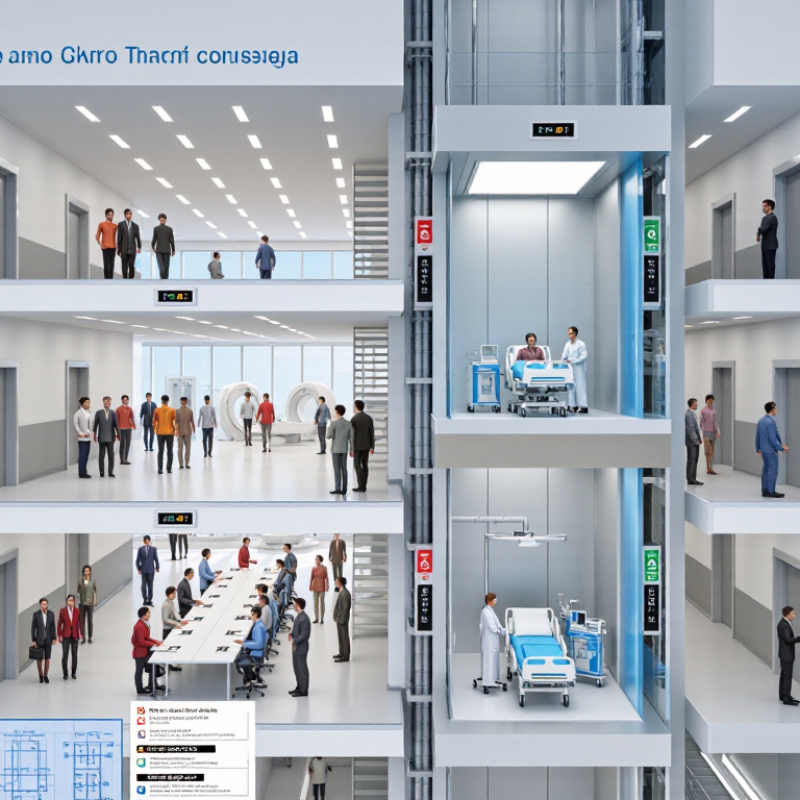
Hospital elevator planning begins with the patient journey, not a passenger count. A bed elevator may carry a patient, two clinicians, oxygen equipment, monitors, and visitors. Bed movement changes everything. Door width, car depth, leveling accuracy, and smooth acceleration directly affect dignity and clinical safety. The elevator should also support fire response, emergency power, clear communication, and infection-control procedures. Applicable building and lift standards must be checked with qualified local professionals.
Capacity needs evidence. CIBSE Guide D evaluates vertical transportation through handling capacity, average interval, and peak traffic analysis. Hospitals should model shift changes, outpatient arrivals, meal delivery, waste removal, and emergency transfers.
A five-minute traffic sample can miss real congestion. Use longer observations and test unusual events. Peak demand often occurs when patients and staff move together, not during quiet periods. A practical model should include the bed, equipment, attendants, and a safety margin.
Accessibility is a clinical requirement. The World Health Organization’s Global Report on Health Equity for Persons with Disabilities estimates that 1.3 billion people, or 16% of the global population, experience significant disability. Elevators need tactile controls, audible and visual signals, reachable buttons, adequate turning space, and reliable doors. These details assist wheelchair users, older adults, patients with low vision, and people carrying medical devices. A design can meet minimum rules yet still feel difficult in practice. Test a full-size mock-up with staff and wheelchair users before final procurement. Recheck assumptions after occupancy. Real hospitals rarely behave like spreadsheets.
Start with the patient journey, not passenger numbers. A bed may carry two clinicians, oxygen equipment, monitors, and visitors. Door width, car depth, and smooth acceleration matter. A simple count is often misleading.
Study shift changes, clinic arrivals, meal delivery, waste removal, and emergency transfers. Measure traffic during fifteen-minute blocks. Include the bed, equipment, attendants, and a safety margin. Quiet periods reveal little.
Place public elevators near the main entrance. Put clinical elevators beside wards and service elevators near loading areas. Keep corridors wide enough for two beds to pass. Movement patterns matter more than floor count.
Provide a protected route from ambulance entry to critical departments. Include backup power, clear controls, and reliable communication. Test the route with an occupied bed, oxygen equipment, and two staff members. Paper plans can deceive.
Use tactile buttons, audible signals, visual indicators, and reachable controls. Provide enough turning space for wheelchairs and medical devices. Test a full-size mock-up with wheelchair users and hospital staff. Minimum compliance may still feel difficult.
Separate clean and soiled transport wherever practical. Plan barriers during installation and protect nearby corridors from construction dust. Include cleaning procedures, temporary routes, and staff training. Real workflows may expose weak assumptions.
Include structural changes, installation disruption, energy, inspections, repairs, modernization, and disposal. Also calculate shutdown risks and temporary access. A cheaper five-year contract may cost more later. Forecasts are rarely perfect.
Record downtime minutes, emergency callouts, waiting periods, and peak traffic monthly. Compare results during clinic mornings, visiting hours, and shift changes. Recheck the design after occupancy. The spreadsheet may be wrong.
How to choose elevators for hospitals and medical buildings begins with understanding the facility’s safety, capacity, and accessibility requirements. Elevators should support patients with limited mobility, medical beds, wheelchairs, visitors, and staff while maintaining smooth and reliable movement. Suitable options may include passenger elevators, bed or stretcher elevators, service elevators, and emergency-use elevators, depending on the building’s size and daily operations. Important features include spacious cabins, accurate leveling, durable finishes, clear controls, backup power, ventilation, and systems that support infection control and emergency response.
Effective planning also considers elevator placement, traffic flow, separation of public and service movement, and rapid access for emergency teams. Decision-makers should evaluate installation conditions, maintenance support, energy use, expected service life, and total operating costs rather than focusing only on the initial price. A well-planned elevator system can improve patient dignity, staff efficiency, safety, and the long-term performance of a medical facility.

 Ascom Elevator