Choosing the right elevator can be a tricky decision. Many factors come into play. How to choose between hydraulic and traction elevators is a common question among building owners.
Hydraulic elevators operate using fluid pressure, making them ideal for low-rise buildings. They have a simpler design and can be more cost-effective for shorter distances. However, they require more maintenance due to their hydraulic fluid systems. On the other hand, traction elevators use cables and pulleys, offering greater energy efficiency and speed. They excel in taller buildings, but their installation can be more complex and costly.
Understanding these differences is crucial. Consider the specific needs of your building. Reflect on aspects like building height, traffic volume, and budget constraints. These factors will help guide your choice, ensuring you select the elevator that best fits your project’s goals. Ultimately, making an informed decision can lead to improved functionality and satisfaction for users.
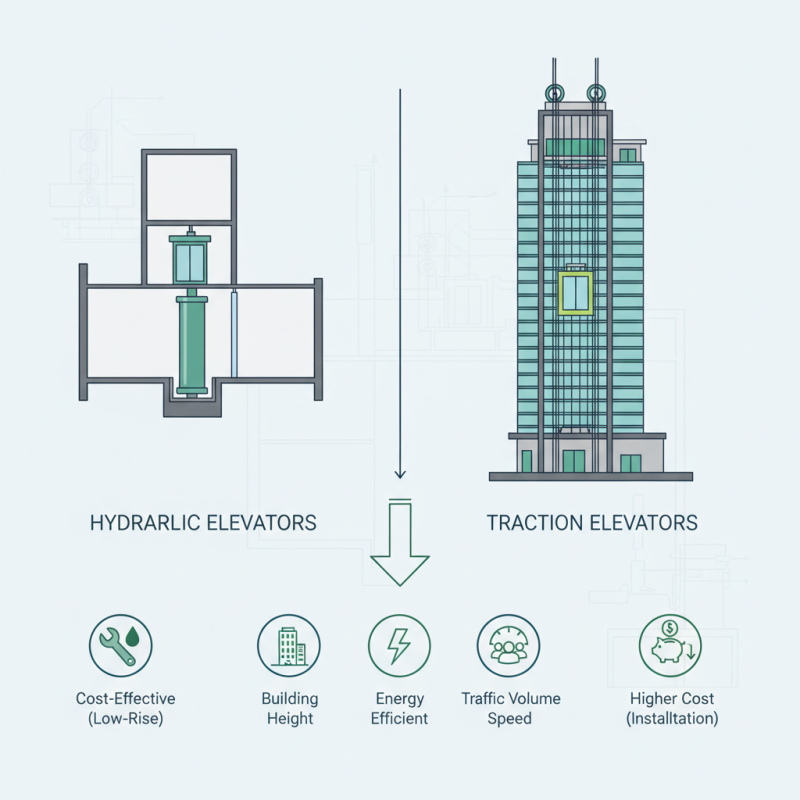
Choosing the right elevator system can be challenging. One key factor is the building's height. Hydraulic elevators work well in low-rise structures, typically up to five floors. They are efficient for these levels but can be slower. Traction elevators are better for taller buildings. They utilize a cable system and are more energy-efficient for higher travel distances.
Consider the space available. Hydraulic elevators need a machine room and extra space for cylinders. This can make them less ideal for tighter designs. On the other hand, traction elevators can be more compact. They might fit better into modern architectural layouts.
Cost is another element to think about. Hydraulic elevators generally have lower initial costs. However, they may require more maintenance over time. Traction systems could be more expensive upfront, but their longevity might offset that. Balancing these factors requires careful consideration. It’s wise to evaluate your specific needs against these pros and cons.
Hydraulic elevators operate using a fluid-driven mechanism. They rely on a pump that pushes hydraulic fluid into a cylinder. This action raises the elevator car. When descending, the fluid flows back to the pump. This design allows smooth stops and starts. Its simplicity is appealing for low-rise buildings.
Understanding the basic mechanisms of hydraulic elevators provides insight into their reliability. These elevators typically require less machinery in the shaft. While this can reduce installation costs, maintenance is still important. Oil leaks can happen, leading to potential environmental concerns. Regular checks are essential to avoid issues.
The performance of hydraulic elevators is influenced by the weight of the cabin. They may struggle with larger loads, affecting efficiency. Users should consider their requirements and the building height. By evaluating these aspects, one can make a more informed decision. The draw of a hydraulic elevator is its straightforward mechanism, but remember to weigh the pros and cons carefully.
When choosing an elevator, understanding traction elevators is vital. These systems use a pulley mechanism with a counterweight. This design improves efficiency and requires less energy than hydraulic options. According to a report by the Elevator World, traction elevators consume about 30% less energy.
Traction elevators have notable features that enhance their performance. One is their speed; they can travel at rates up to 1,200 feet per minute. This speed is crucial for high-rise buildings. Additionally, they are more space-efficient, offering flexible design options. The compact nature of traction systems allows for slimmer shafts, saving valuable building space.
When selecting between hydraulic and traction elevators, consider these tips. Assess the building's height. Traction elevators excel in skyscrapers, while hydraulic systems suit low-rise buildings. Check for energy efficiency. If you prioritize sustainability, traction systems may be your best choice. Lastly, evaluate maintenance costs. Traction elevators require less frequent servicing, making them cost-effective long-term.
When considering an elevator installation, assessing space and installation requirements is crucial. Hydraulic elevators need a machine room and a pit. The pit must be deep enough for smooth operation. On the other hand, traction elevators require less space but often need a dedicated shaft. This difference can significantly impact building design.
Consider the building's vertical height. Hydraulic elevators function well in low to mid-rise buildings. They may not suit taller buildings due to speed limitations. Traction elevators are faster and ideal for high-rise structures. However, installing them can be complex.
Ceiling height also plays a crucial role. Traction elevators can fit into lower ceilings, but space must be complete for smooth operations. Examine the current layout and future expansion possibilities. Sometimes, a hydraulic model may seem simpler but could restrict future modifications. Reflect on these aspects to make a more informed decision.
This bar chart compares the installation space requirements of hydraulic and traction elevators. Hydraulic elevators typically require more space due to their complex components, while traction elevators are more space-efficient.
When evaluating hydraulic and traction elevators, cost plays a significant role. Hydraulic elevators tend to have lower upfront costs. However, their long-term maintenance can lead to higher expenses. Conversely, traction elevators may require more investment initially, but they often perform better over time. The lifespan of traction systems can outweigh the initial price difference, making them a smart choice in certain scenarios.
Energy efficiency is another critical factor. Hydraulic elevators may consume more energy due to their reliance on fluid systems. This can result in higher utility bills. In comparison, traction elevators generally offer better energy efficiency. Their electric motors use less power, which is advantageous for the environment and your pocketbook. Some older hydraulic models can be inefficient, leading to performance issues. Evaluating these factors requires careful consideration of the building's needs.
: Hydraulic elevators use a pump to push fluid into a cylinder. This fluid raises the elevator.
Maintenance is crucial to avoid issues like oil leaks. Regular checks help maintain performance and safety.
No, hydraulic elevators are best for low-rise buildings. They may struggle with larger loads in high-rise buildings.
Traction elevators are more energy-efficient. They consume about 30% less energy compared to hydraulic options.
Traction elevators can reach speeds of up to 1,200 feet per minute. This speed is vital for high-rise buildings.
Traction elevators may have higher upfront costs, but they often perform better and require less maintenance over time.
Assess building height, energy efficiency, and maintenance costs to make an informed decision.
Yes, oil leaks from hydraulic elevators can create environmental issues, making regular maintenance important.
Yes, traction elevators are more space-efficient and offer options for slimmer shafts in building designs.
Hydraulic elevators may use more energy, leading to higher utility bills compared to the electric motors of traction elevators.
When considering how to choose between hydraulic and traction elevators, several key factors come into play. Firstly, understanding the basic mechanisms of both elevator types is essential; hydraulic elevators utilize fluid pressure for movement, while traction elevators rely on cables and pulleys. Each has its unique advantages and is suited for different applications.
Space and installation requirements should also be assessed, as hydraulic elevators often need more space for the machinery, while traction elevators require less overhead space but may demand a machine room. Additionally, evaluating the overall cost, maintenance, and energy efficiency of each type will help in making an informed decision. These considerations collectively guide the selection process, ensuring that the chosen elevator meets both functional and budgetary needs.

Ascom Elevator