In the world of vertical transportation, understanding the differences between passenger and freight elevators is crucial. According to industry expert John Smith, "Passenger elevators focus on speed and comfort, while freight elevators prioritize space and load capacity." This statement encapsulates the essence of the debate surrounding elevator design.
Passenger elevators are designed for people, focusing on comfort, aesthetics, and swift travel between floors. They usually feature sleek designs, smooth rides, and often come with advanced technology to enhance user experience. In contrast, freight elevators prioritize utility. They are built to carry large, heavy loads and facilitate the movement of goods in warehouses or factories. Their structures are sturdy, often lacking the polished finishes of passenger elevators.
So, what is the difference between passenger and freight elevators? At first glance, the distinction seems straightforward. However, when you look deeper, factors like safety, speed, and operational efficiency come into play. While both serve essential functions in buildings, their designs reflect their unique purposes. Understanding these variations helps ensure the right choice for particular needs.
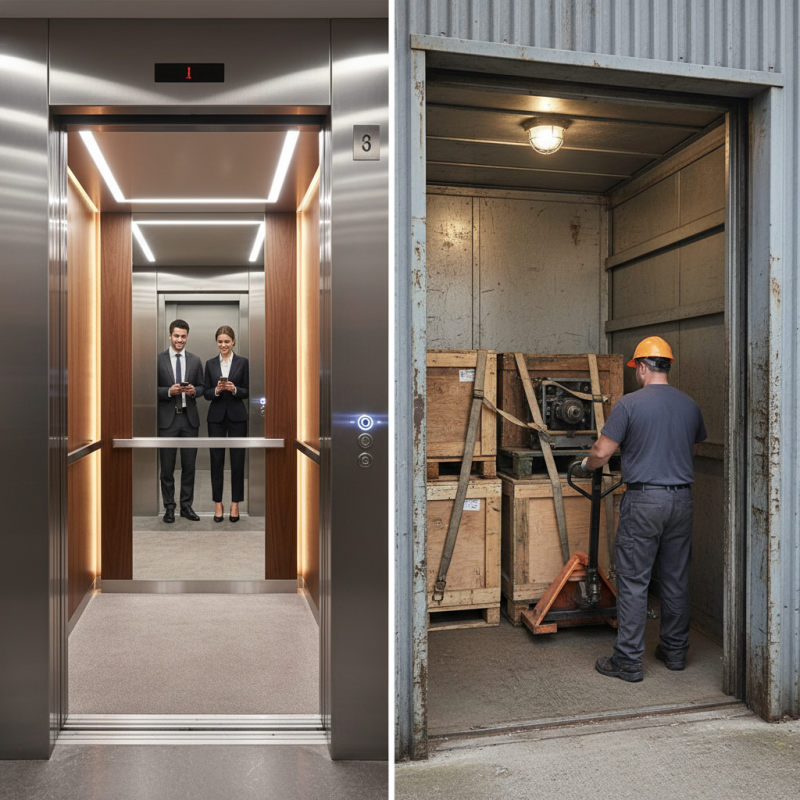
Differences in Design: Passenger vs. Freight Elevators
When considering passenger and freight elevators, design differences stand out. Passenger elevators focus on comfort and aesthetics. They often have smooth finishes, bright lighting, and are designed to enhance the user experience. In contrast, freight elevators prioritize functionality and durability. Their interiors have a more industrial feel, using materials like steel or wood to withstand heavy loads.
Passenger elevators typically have a smaller capacity than freight elevators. They are usually sized for people rather than bulky goods. This influences their design since they include features such as mirrors and designer panels. On the other hand, freight elevators are built to accommodate large items. They often have wider doors and sturdier platforms, allowing for easy loading and unloading.
Tip: When selecting an elevator type, assess the average load requirements. Understand the space constraints to ensure proper fit and functionality.
Freight elevators can be used in various settings, but they may lack the decorative touches of passenger lifts. A freight elevator might feel less inviting. Examining how both types suit their intended functions is vital. Sometimes, a mixed-use elevator might be necessary.
Tip: Regular maintenance can improve the lifespan of both elevator types. Be proactive in servicing them to avoid costly repairs.
Capacity Considerations for Passenger and Freight Elevators
When it comes to passenger and freight elevators, capacity is a crucial factor to consider. Passenger elevators typically have a design capacity ranging from 1,000 to 5,000 pounds. They focus on efficiently transporting people quickly. In contrast, freight elevators can handle much heavier loads. These elevators are built for transporting goods. Their capacity can exceed 10,000 pounds in some cases. This difference in design significantly affects their operation.
Beyond weight capacity, the internal dimensions often differ. Passenger elevators prioritize space for individuals. They may include features like larger doors for easier access. Freight elevators, however, emphasize space to accommodate pallets or large items. This focus on utility means they are usually larger. Proper design is essential for safety. Underestimating weight can lead to issues. It's vital to match the elevator type to its intended use.
The operational environment also matters. Passenger elevators often have smooth, quick operations for high traffic. Freight elevators might have slower speed to ensure stability when transporting heavy loads. Operating these elevators requires specific maintenance. Regular inspections are necessary. Mistakes can lead to costly repairs or accidents. Understanding these capacity aspects is vital to making informed decisions about which elevator system fits your needs.
2026 Best Differences Between Passenger and Freight Elevators
| Feature |
Passenger Elevators |
Freight Elevators |
| Capacity |
Around 2,000 to 3,500 lbs |
Up to 6,000 lbs or more |
| Intended Use |
Transporting passengers |
Transporting goods and materials |
| Design |
Aesthetically pleasing and spacious |
Functional and durable without aesthetic focus |
| Loading and Unloading |
Single door access, typical for buildings |
Double door access for easy loading |
| Floor Height |
Standard height, usually up to 12 feet |
Higher capacity for taller loading docks |
| Maintenance Needs |
Routine inspections and passenger safety checks |
More frequent checks for operational efficiency |
| Control System |
Automatic controls for efficient passenger transport |
Manual or automatic controls based on load |
| Usage Frequency |
High frequency in commercial buildings |
Utilized based on specific business needs |
Operational Speed: How It Varies Between Both Elevator Types
When comparing passenger and freight elevators, operational speed emerges as a critical difference. Passenger elevators typically operate at higher speeds. They often move at around 200 to 500 feet per minute. This design caters to human transportation in busy settings, such as office buildings or shopping malls. Passengers expect quick access to their desired floors, often without excessive waiting.
Freight elevators, on the other hand, usually run at slower speeds. They range from 100 to 250 feet per minute. These elevators prioritize safety and functionality over speed. They accommodate various bulky goods but might involve longer waiting times. This slower pace allows for secure loading and unloading of heavy items, reducing accidents.
Differences arise not just from speed alone. Passenger elevators provide a smoother experience. In contrast, freight elevators may feel more utilitarian. Users might prefer the comfort of a fast elevator, yet they must acknowledge that freight options are often more rugged. Each elevator type serves a distinct purpose, reflecting the needs of their users.
Operational Speed: Passenger vs. Freight Elevators
Safety Features Distinct to Passenger and Freight Elevators
Passenger and freight elevators serve distinct purposes, and their safety features reflect those differences. Passenger elevators prioritize human safety. They are equipped with emergency brakes and automatic door sensors. These sensors prevent doors from closing on passengers. Additionally, they often include intercom systems for emergencies. This focus on safety is crucial in densely populated buildings.
Freight elevators, on the other hand, have safety features tailored to heavy loads. They use reinforced materials to support freight weight. Loading doors are typically wider and more robust. However, they lack some passenger elevator features. For instance, freight elevators may not have automatic doors. This means operators must take extra precautions during loading. Visibility can also be limited in certain designs, raising safety concerns.
While both types of elevators aim to protect users, the specific safety elements highlight their different functions. Understanding these differences is vital. Recognizing potential shortcomings can help improve safety. It is a continuous process. Both elevator types need regular maintenance checks to ensure all safety features function properly. This attention to detail keeps users safe and secure.
Usage Scenarios: Where Each Elevator Excels and Is Preferred
Passenger elevators and freight elevators are designed for different purposes. Passenger elevators are used in buildings to transport people. They are typically faster, quieter, and designed with comfort in mind. These elevators often come with aesthetic features, making them appealing for public spaces. In contrast, freight elevators prioritize heavy loads and durability. They have a more rugged design to handle bulky items and industrial use.
In commercial settings like warehouses,
freight elevators shine. They efficiently move inventory to various levels. They can accommodate larger entrances and robust guides. On the other hand,
passenger elevators are ideal for office buildings and residential complexes. Their smooth operation enhances user experience. They can also be programmed for designated floors, ensuring safety and convenience.
Tips: When designing a building, consider your elevator needs carefully. Assess the value of passenger comfort versus freight capacity. Always consult an expert to evaluate the best options for your specific usage scenario.
Additionally, ensure regular maintenance for both types of elevators. This keeps operations smooth and reduces downtime.
Conclusion
The article "2026 Best Differences Between Passenger and Freight Elevators" outlines the key distinctions between these two types of elevators. Primarily, the differences in design are notable, as passenger elevators are built for comfort and aesthetics, while freight elevators prioritize functionality and durability to accommodate heavy loads. Capacity considerations also play a crucial role; passenger elevators typically have a lower weight limit compared to freight elevators, which are designed for transporting bulky items.
Another significant aspect explored is the operational speed, with passenger elevators usually operating at higher velocities to ensure quick transportation of individuals. Safety features also vary, as passenger elevators are equipped with amenities such as emergency alarms and intercoms, whereas freight elevators focus on stability and secure load handling. Lastly, the article discusses usage scenarios, highlighting that passenger elevators are preferred in commercial buildings, while freight elevators excel in industrial settings. This analysis helps clarify "what is the difference between passenger and freight elevators," guiding users in making an informed choice based on their specific needs.

 Ascom Elevator